
Key Takeaways
- NHTSA mandates immediate car seat replacement after any moderate or severe crash, even if the seat looks undamaged — internal damage is invisible but deadly.
- All 5 minor crash conditions must be met (vehicle drivable, no door damage, no injuries, no airbag deployment, no visible seat damage); miss even one, replace the seat immediately.
- Texas collision insurance covers car seat replacement – keep your photos, police report, and purchase receipt ready before filing your claim.
- New FMVSS 213a federal standard kicks in December 5, 2026 – when replacing, choose seats already certified to this stronger side-impact protection standard.
- Never donate or reuse a crashed seat – cut the straps, mark it “DO NOT USE,” and dispose via Texas municipal programs or retailer trade-in events like Target.
A car accident is stressful enough, but when your child is in the backseat, one question most Texas parents overlook in the chaos is: Can you still use that car seat?
The answer isn’t always obvious. Properly used car seats reduce fatal injury risk by 71% for infants and 54% for toddlers Pstriallaw but only when the seat is structurally intact. A seat that’s absorbed crash forces can look completely fine and still fail your child in the next collision.
NHTSA is clear: after a moderate or severe crash, you need to replace the car seat immediately, no exceptions. Hawk Law Group. This guide helps Texas parents understand exactly when replacement is required, what the law says, and how to get it covered. Learn more about car seat safety before making that call.
Understanding Car Seat Safety Standards
Car seat manufacturers adhere to strict safety standards, rigorously testing their products to ensure they provide maximum protection in the event of a crash. These standards, often exceeding federal requirements, dictate how car seats are designed, manufactured, and tested. In 2026, these standards are getting stronger. The updated Federal Motor Vehicle Safety Standard (FMVSS) 213a now requires all new car seats to pass mandatory side-impact crash testing, with full compliance required by December 5, 2026. Understanding these standards is crucial for making informed decisions about car seat usage and replacement.
When to Replace a Car Seat After an Accident
The National Highway Traffic Safety Administration (NHTSA) provides guidelines on when you need a new car seat after an accident. NHTSA recommends replacing a car seat after a moderate to severe crash. A minor crash does not necessarily require replacement, but only if all five of these conditions are met:
- The vehicle was able to be driven away from the crash site
- The door nearest the car seat was undamaged
- No passengers sustained injuries
- The airbags did not deploy
- There is no visible damage to the car seat
If any one of these conditions is not met, you should replace the car seat after an accident right away, as internal structural damage may not be visible to the eye. For more on how Texas accident claims work when children are involved, our Fort Worth car accident lawyers can help you understand your options.
Determining crash severity can still be subjective. It’s always best to err on the side of caution and consult with a certified Child Passenger Safety Technician (CPST) for guidance. They can physically assess the car seat and provide expert advice on whether replacement is necessary. You can find a CPST near you through the NHTSA certified technician locator.
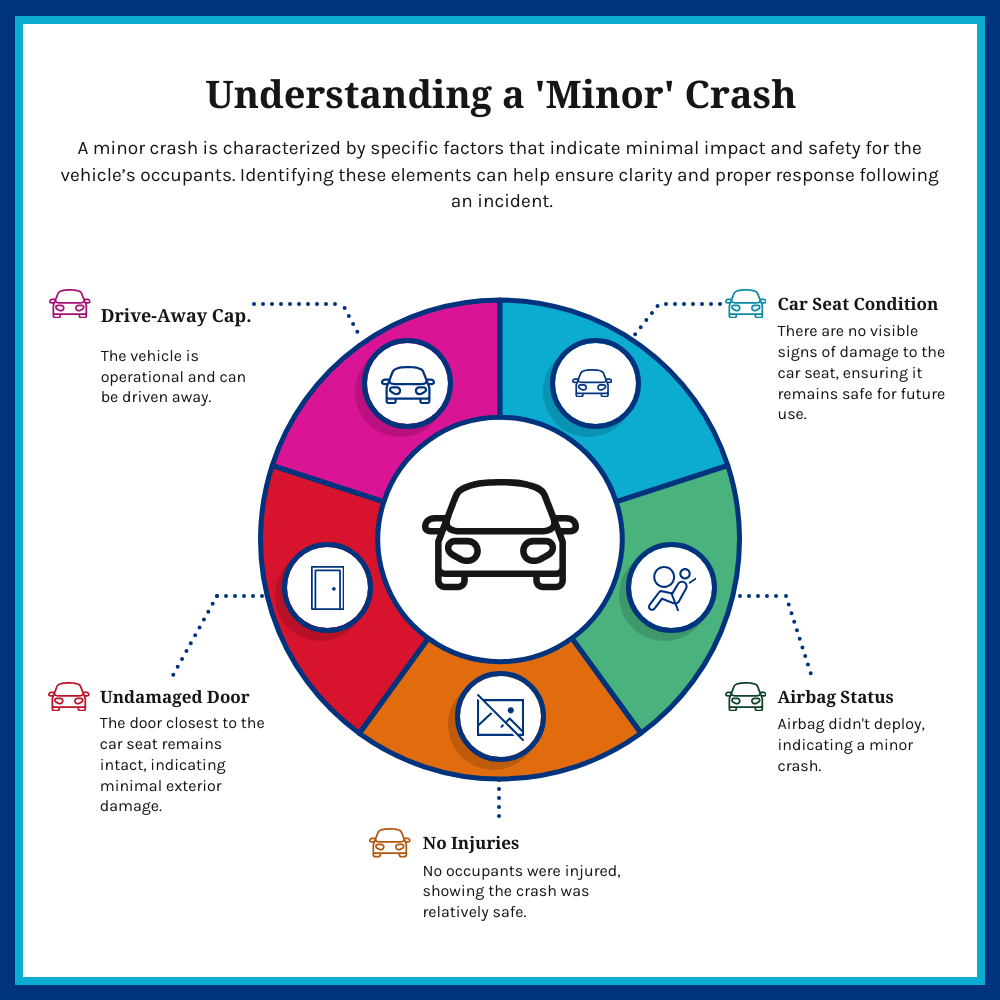
Defining a “Minor” Crash
NHTSA defines a minor crash as one that meets all of the following criteria:
- The vehicle could be driven away from the crash site safely.
- The door nearest the car seat was undamaged.
- There were no injuries to the occupants in the vehicle.
- The airbag (if present) did not deploy.
- There is no visible damage to the car seat.
All five conditions must be met, not four out of five. If your accident does not meet every single one of these criteria, it is considered moderate to severe, and the car seat should be replaced immediately.
What many Texas parents don’t realize is that crash forces can compromise a seat’s internal structure even when there’s no visible damage. NHTSA notes that car seats are designed as single-impact protection systems, Wilhite Law Firm. Once stressed in a crash, their ability to protect in a second impact is no longer guaranteed.
It’s also worth knowing that starting December 5, 2026, all car seats sold in the U.S. must comply with FMVSS 213a, a new federal safety standard with significantly stronger side-impact protection requirements. If you do need to replace a seat, look for models already certified to this updated standard.
If you’re unsure whether your crash qualifies as minor, a certified Child Passenger Safety Technician at Francis Injury can help you understand your options, including whether your insurance should cover the replacement cost.
Why Replace a Car Seat After a Crash?
Even if a car seat appears undamaged after a crash, internal damage may have occurred. The forces involved in a collision can compromise the structural integrity of the car seat, making it less effective in a future crash. This damage may not be visible to the naked eye. In fact, according to NHTSA, car seats are designed as single-use safety devices, meaning their energy-absorbing materials may not perform the same way after a second impact. That’s exactly why replacement of car seats after accident situations is so strongly recommended, even when everything looks fine on the outside. Replacing the car seat ensures your child’s safety in the event of another accident.
Here’s what can happen inside a seat after a crash, even one that looked minor:
- Plastic shell develops invisible stress fractures
- Foam padding loses its ability to absorb impact energy
- Harness attachment points shift out of alignment
- Metal frame components suffer fatigue that no visual check can catch
What to Do With a Car Seat After a Crash
If you determine that your car seat needs to be replaced, it’s essential to dispose of the damaged car seat properly. Here’s what to do step by step:
- Cut the harness straps completely so no one can reuse the seat
- Write “DO NOT USE – DAMAGED IN CRASH” across the shell in permanent marker
- Remove the manufacturer labels so the seat can’t be falsely resold as safe
- Check your local options – many Texas cities offer drop-off programs through municipal waste management, and retailers like Target run periodic car seat trade-in events
- Contact the manufacturer – brands like Graco, Britax, and Chicco have recycling resources or can point you to a program near you
Never donate a crashed seat, even if it looks perfectly fine. Another family has no way of knowing what that seat has already been through.
Insurance and Car Seat Replacement
In most cases, car seat replacement insurance falls under your collision coverage. Standard liability policies typically don’t cover personal belongings inside the vehicle, so it’s important to check your policy type before filing. Contact your insurance company as soon as possible to report the accident and ask about their replacement policy.
Many Texas insurers will cover the cost even when replacing a car seat after a minor accident with no visible damage, especially when you back your claim with the manufacturer’s official replacement recommendation. To make the process smoother, keep the following ready:
- Photos of the car seat from multiple angles
- A copy of the police or accident report
- Your original purchase receipt or order confirmation
- The manufacturer’s owner manual or their official replacement recommendation
- Your claim number from the insurer
If your claim gets disputed, pairing your documentation with NHTSA’s official car seat replacement recommendations can help get the decision reversed. And if an at-fault driver’s insurer is still refusing to cover costs, speaking with a Texas personal injury attorney can make a real difference in getting your family the compensation you deserve.
Choosing a Replacement Child Car Seat
When you need a new car seat after an accident, choosing the right one matters just as much as replacing it promptly. Start with your child’s current age, weight, and height. The new seat must fit all three measurements within the manufacturer’s stated limits, not just one of them. A seat that is almost too heavy for today isn’t a safe long-term choice, even if it technically fits.
Look for seats that meet the updated FMVSS 213a federal safety standard, which introduces mandatory side-impact testing with a compliance deadline of December 5, 2026. Seats being manufactured and sold now are increasingly built to this higher standard. Check the label before you buy. Consult the NHTSA Car Seat Finder tool to match your child’s measurements with the right seat type, and always verify proper installation with a Certified Passenger Safety Technician (CPST). TxDOT’s Save Me With a Seat program offers free inspections at 25 district offices across Texas.
Frequently Asked Questions
+What should I do with a car seat after an accident?
+How much does it cost to replace a car seat after an accident?
+Do car seats need to be replaced after an accident?
+Do you legally have to replace a car seat after an accident in Texas?
Consulting with a Car Accident Attorney
Knowing you need to replace a car seat after an accident is one thing; getting the at-fault driver’s insurance to actually pay for it is another. Texas is a fault-based state, meaning the responsible party’s insurer is legally obligated to cover your damages, including your child’s seat. Insurance companies know which lawyers settle cheap and which ones are willing to go to court. Boggustipton having an experienced Texas attorney in your corner changes how seriously your claim is handled.
An attorney can document the car seat as part of your property damage claim, push back if the insurer tries to minimize or deny it, and make sure your child’s safety isn’t treated as a line item to negotiate away. If you’d like to understand how Texas fault laws can directly impact what you recover, Francis Injury’s guide on Texas fault laws is a helpful starting point.
If you have been injured in a car, truck, or motorcycle accident, contact Michael Francis at Francis Injury today for a free consultation. We are dedicated to helping you get the justice and compensation you deserve.

