
Summary
- Multi-state trucking crashes involve complicated legal issues, including jurisdiction, federal rules, and insurance coverage across different states.
- Texas sees thousands of interstate truck accidents each year because of its central role in U.S. freight routes.
- Skilled attorneys understand how to handle conflicting state laws and build strong compensation claims.
- They work with investigators, insurers, and federal agencies to secure justice for injured victims.
- This blog explains exactly how Texas truck accident attorneys manage multi-state trucking cases step by step.
Why Multi-State Trucking Accidents Are So Complicated
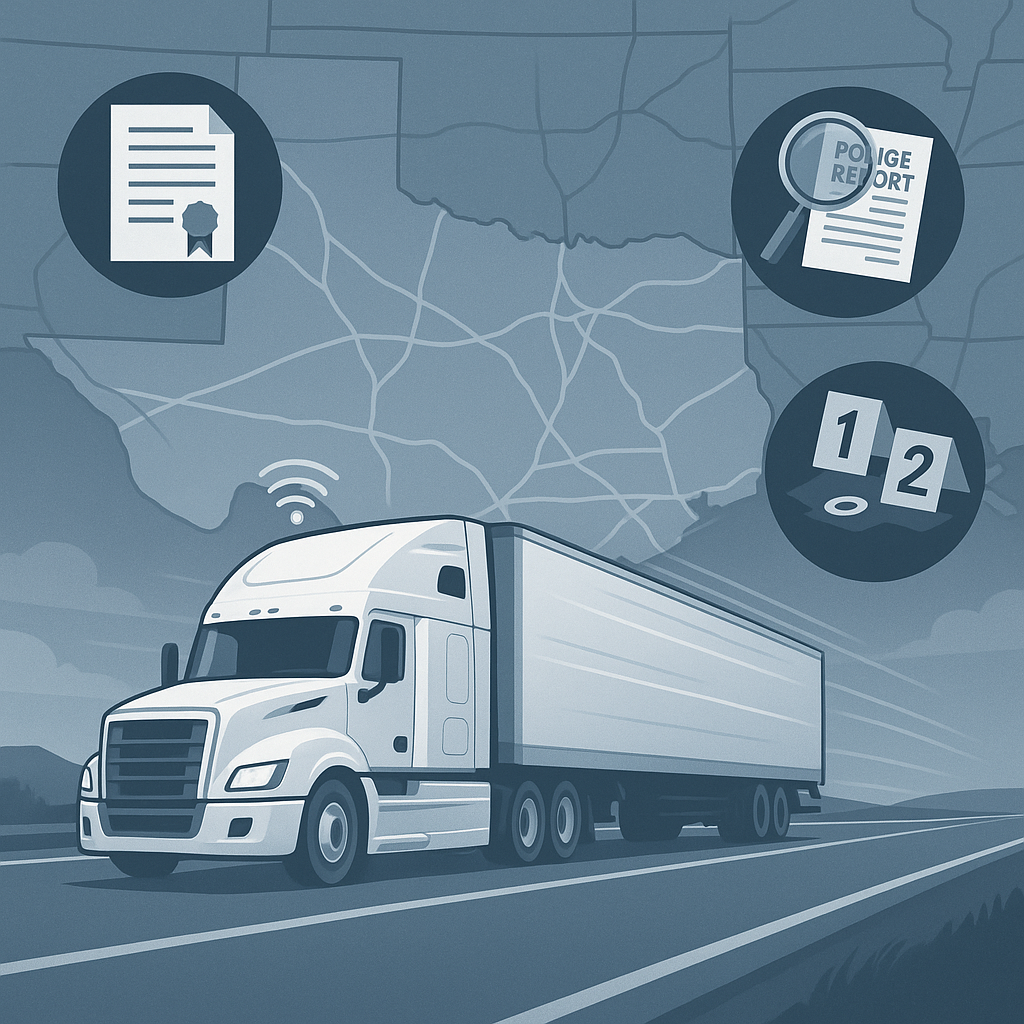
When a trucking accident crosses state lines, it’s never as simple as filing a local claim. Multi-state cases involve several layers of law — federal trucking regulations, state traffic rules, and different court jurisdictions. For example, if a truck registered in Oklahoma crashes into a vehicle on I-35 in Texas, both Texas law and Oklahoma business regulations could come into play.
According to the Federal Motor Carrier Safety Administration (FMCSA), over 5,000 fatal truck crashes occurred nationwide in 2024, and a large portion involved interstate carriers operating in multiple states. These trucks are governed by federal safety rules under the Department of Transportation (DOT), but when an accident occurs, each state’s court decides liability differently.
This complexity is exactly why having an experienced Texas truck accident attorney is essential. They know how to navigate conflicting legal systems and ensure the victim’s claim doesn’t get lost between state borders.
Step 1: Determining Jurisdiction and Venue
The first and most critical step after a multi-state accident is deciding where the case should be filed. In legal terms, this is called “jurisdiction.” The attorney must figure out which court has the right to hear the case — and which venue will most benefit the injured client.
A Texas attorney will start by examining several factors: where the accident happened, where the trucking company’s headquarters are located, where the truck was registered, and even where the victim lives. For instance, if the crash occurred in Texas but the trucking company operates out of Louisiana, the attorney might still choose to file in Texas if it offers stronger protections and higher potential compensation for the victim.
Choosing the right jurisdiction can dramatically affect the outcome. Some states limit damages more than others, or have shorter filing deadlines. Texas follows the “modified comparative negligence” rule — meaning if a victim is found more than 50% at fault, they can’t recover damages. An attorney will carefully evaluate how each state’s laws may impact the case before proceeding.
Step 2: Understanding Federal and State Law Overlap
Truck accident cases don’t just involve local laws; they must comply with federal trucking regulations that apply to all interstate carriers. These rules, set by the FMCSA, cover every aspect of trucking safety — from driver rest hours and vehicle inspections to cargo weight and drug testing.
However, each state can add its own rules on top of these federal standards. Texas, for example, has strict commercial driver requirements and state inspection programs that go beyond FMCSA minimums. In a multi-state case, attorneys need to evaluate whether the trucking company violated federal laws, state laws, or both.
For instance, imagine a truck from Arizona that crashes in Texas because the driver was fatigued. The attorney must determine if the company broke the FMCSA’s Hours-of-Service rule — which limits driving time — and whether Texas’s state enforcement records show prior violations. This dual analysis helps build a stronger case showing the company’s pattern of negligence.
Step 3: Gathering Cross-State Evidence
In a multi-state trucking case, evidence collection becomes a race against time — and distance. Attorneys must gather documentation not only from the accident scene but also from the trucking company’s home state, the driver’s records, and the vehicle’s telematics system.
The evidence includes driver logs, GPS data, black box recordings, maintenance reports, and dispatch communications. All of these help reconstruct what happened before the crash. Many trucking companies attempt to delete or alter this data quickly after an accident to protect themselves, so attorneys act fast by sending spoliation or preservation letters. These legally require the company to keep all relevant evidence intact.
An attorney also coordinates with local police in each involved state, retrieves accident reconstruction data, and works with the Department of Transportation if a federal investigation is ongoing. This comprehensive evidence process ensures that no critical piece of proof slips away, regardless of where it’s stored.
Step 4: Dealing with Multi-State Insurance Policies
Trucking companies usually carry multiple layers of insurance, sometimes under different state laws. There might be one policy for the truck, another for the driver, and even additional “umbrella” coverage for the company. Determining which policy applies can be complicated when a crash involves several jurisdictions.
A Texas attorney will communicate directly with insurers across states to clarify coverage responsibilities. They’ll analyze each policy’s governing law, policy limits, and exclusions to ensure victims don’t miss out on compensation. For instance, some out-of-state insurers try to claim the crash falls outside their coverage territory. An attorney knows how to challenge this by proving that interstate operation automatically extends coverage to Texas highways.
According to the National Highway Traffic Safety Administration (NHTSA), the average cost of a large truck crash involving injuries exceeds $195,000, and fatalities can cost more than $4.8 million. That’s why identifying every available insurance source is crucial — a single policy often isn’t enough to cover full damages like medical expenses, lost wages, and long-term care.
Step 5: Exposing Negligence Within Trucking Companies
In most multi-state cases, the root cause isn’t just driver error — it’s corporate negligence. Trucking companies sometimes pressure drivers to violate safety regulations or skip required rest periods to meet tight deadlines.
A Texas attorney digs deep into the company’s practices by reviewing driver employment contracts, dispatch records, and prior FMCSA violations. They may also look into whether the company falsified maintenance logs or failed to train the driver properly.
Often, these companies are structured across several states under different business names to limit liability. Skilled attorneys identify parent corporations and affiliated entities so that all responsible parties are held accountable in the lawsuit.
Step 6: Collaborating with Out-of-State Experts
A strong case often depends on expert testimony. Attorneys work with accident reconstruction specialists, medical professionals, and trucking industry experts — even if they’re located in another state.
For example, a mechanical expert from Colorado might be called in to analyze brake failure data for a truck owned by a Colorado-based company. Meanwhile, medical experts in Texas will assess the victim’s long-term injury costs. This collaboration ensures that the evidence is both accurate and admissible under the legal standards of every state involved.
By combining technical expertise with state-specific knowledge, attorneys can present a comprehensive, science-backed argument proving the trucking company’s negligence.
Federal Regulations That Shape Every Case
Federal trucking laws are the foundation for every interstate case. The FMCSA sets mandatory rules covering:
- Maximum driving hours (11 hours within a 14-hour window)
- Mandatory 30-minute breaks after 8 hours
- Vehicle maintenance standards
- Driver drug and alcohol testing
- Cargo weight limits
When a trucking company violates these rules, it creates a strong basis for liability. For example, if a company allows a driver to exceed hours-of-service limits and that driver causes a fatigue-related crash, the company can be held responsible for negligence per se — meaning the violation itself proves fault.
Recent Trends: The Rise of Multi-State Trucking Accidents in Texas
As of 2025, Texas continues to lead the nation in truck-related fatalities. Data from the Texas Department of Transportation (TxDOT) shows a 9% increase in truck crashes between 2023 and 2025. The rise in e-commerce, supply chain demand, and long-haul deliveries means more out-of-state carriers are passing through Texas highways daily.
While technology such as telematics monitoring and AI-based driver tracking has improved safety, not every trucking company complies consistently across state lines. This inconsistency leads to legal confusion — and opportunities for insurers to exploit gaps in jurisdiction.
An experienced attorney helps level that playing field, ensuring victims don’t get trapped in bureaucratic disputes between states.
What Victims Should Do After a Multi-State Truck Accident
If you’re involved in a trucking accident in Texas that includes an out-of-state company or driver, the steps you take immediately can shape your entire case.
- Get medical help right away. Even minor injuries should be documented for legal and insurance purposes.
- Call the police and file a report. Make sure the report clearly identifies the truck’s license, company name, and registration state.
- Collect as much evidence as possible. Photos, videos, and witness contacts can later help your attorney prove liability.
- Avoid speaking to the trucking company’s insurer until you consult a lawyer. They may try to get statements that hurt your case.
- Contact a Texas truck accident attorney who has experience with multi-state claims and can protect your rights under both state and federal law.
FAQs About Multi-State Trucking Cases in Texas
+Can I file a claim in Texas if the trucking company is based in another state?
+How long do I have to file a claim?
+Who investigates interstate trucking crashes?
+What damages can I recover?
+What should I avoid doing after a truck accident?
Conclusion
Multi-state trucking accidents are some of the most challenging personal injury cases to handle. They require a deep understanding of both Texas personal injury laws and federal transportation regulations. From determining jurisdiction to coordinating with out-of-state experts, every detail matters.
A knowledgeable attorney can make all the difference — ensuring victims receive full compensation, no matter how complex the case becomes. At Francis Injury, our team has extensive experience handling interstate trucking cases across Texas. We know how to confront powerful trucking corporations, navigate conflicting state laws, and fight for the maximum recovery you deserve.
