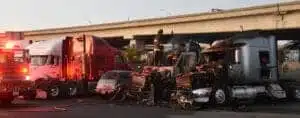
Every day, heavy commercial trucks move through Dallas on I‑35E, I‑30, I‑20, the Mixmaster, LBJ Freeway (I‑635), and U.S. 75 (Central Expressway). With that much truck traffic packed into the Dallas–Fort Worth metroplex, serious crashes are unfortunately common. Recent data show that Dallas County sees several thousand crashes involving commercial motor vehicles each year and ranks near the top in Texas for fatal truck and 18‑wheeler wrecks. Most of the people hurt or killed are the occupants of smaller passenger vehicles, not the truck drivers.
If you or a loved one were injured in a Dallas truck accident, you may be entitled to substantial compensation for your medical bills, lost income, pain and suffering, and more. To recover that compensation, you still have to prove that someone else was negligent. In truck cases, that usually means showing that the trucking company and its driver violated safety rules, cut corners on maintenance, or made reckless decisions that put Dallas drivers at risk.
An experienced Dallas truck accident lawyer can investigate your crash, identify every at‑fault party, and build the evidence needed to hold them accountable. Insurance companies that represent trucking companies fight hard to reduce what they pay, so you should have a legal team that fights just as hard for you.
Common causes of truck accidents in and around Dallas include:
- Driver error or willful failure to follow the law — for example, driving while fatigued, distracted, impaired, or aggressively weaving through traffic on I‑35E or I‑30.
- Improper maintenance and inspections — worn brakes, bald tires, and other neglected components that make an 80,000‑pound truck impossible to stop in time.
- Defective truck parts — design or manufacturing problems in brakes, steering systems, tires, or other components that fail even when the truck is maintained properly.
- Third‑party negligence — including cargo loading companies, maintenance vendors, or other drivers whose careless actions contribute to a crash.
Below, we break down these common causes of Dallas truck accidents and explain what they may mean for your injury claim.
Schedule Your Free Consultation

Driver-related Causes
In many Dallas truck accidents, the main cause is something the truck driver did or failed to do. Navigating congested stretches of I‑35E, I‑30, I‑20, I‑45, the High Five, and other Dallas interchanges requires constant attention and good judgment. When a truck driver is tired, distracted, impaired, or inexperienced, even a small mistake can trigger a multi-vehicle pileup.
Fatigued Driving
Truck drivers who serve the Dallas–Fort Worth area often run long, overnight routes to and from warehouses in southern Dallas, the Inland Port area, and major distribution hubs along I‑20 and I‑45. Federal hours-of-service rules limit how long a commercial driver can stay behind the wheel without rest, but some drivers and trucking companies push those limits or ignore them to meet tight delivery schedules.
Fatigued drivers react more slowly, drift out of their lanes, and may miss stopped traffic ahead. Major federal crash studies have found that fatigue is a factor in a significant share of serious large truck crashes nationwide, which is especially dangerous when a semi is barreling through Dallas at highway speed.
Evidence your lawyer may look for in a fatigue case includes:
- Electronic logging device (ELD) data and paper logbooks showing hours-of-service violations.
- Time-stamped fuel, toll, warehouse, and delivery records that contradict the driver’s logs.
- Dispatch messages and GPS data showing the driver was on the road too long or skipping required breaks.
- Witness statements describing a truck drifting, swerving, or failing to brake in time.
For ordinary passenger-vehicle drivers, planning a permitted rest stop is one way to avoid continuing while dangerously tired. Our guide asks is it illegal to sleep in your car in Texas and explains how to check the specific parking location; commercial-driver rules require a separate review.
Distracted Driving
Dallas truck drivers spend long hours in the cab, and some try to multitask to save time. Texting, checking dispatch apps, using a GPS, adjusting in-cab systems, or even eating behind the wheel all take a driver’s eyes, hands, or mind off driving. On fast-moving Dallas freeways and tight urban streets near Downtown, Deep Ellum, or the Design District, even a one- or two-second distraction is enough to cause a catastrophic rear-end or lane-change collision.
Common signs of a distracted truck driver include:
- Truck drifting within its lane or onto the shoulder before suddenly correcting.
- No or very late braking before impact, even though traffic was clearly slowing down.
- The driver admitting to using a phone, GPS, or radio right before the crash.
In a distracted-driving case, your attorney may seek cell phone records, cab-camera footage, and data from the truck’s electronic systems to show the driver was not paying attention.
Speeding
Speeding is more than just driving above the posted limit. In Dallas, many truck wrecks involve drivers going too fast for heavy traffic, rain, road construction, or curves on ramps connecting I‑35E, I‑30, and I‑45. A fully loaded 18‑wheeler can weigh 20 to 30 times more than a passenger car, so it needs much more distance to stop. When a truck is speeding or tailgating, there may be no time or space left to avoid a collision.
Serious speeding-related truck crashes often happen:
- In stop-and-go traffic on Central Expressway or LBJ Freeway when a truck driver fails to slow with the flow of traffic.
- In construction zones where lane shifts and narrowed lanes leave little room for error.
- On wet roads during North Texas storms, when slick pavement greatly increases stopping distances.
In these cases, your lawyer may use black box (ECM) data, skid mark measurements, and crash reconstruction experts to show the truck was traveling too fast for conditions, even if the driver claims otherwise.
Speed alone should not be turned into an unsupported legal conclusion. Learn what is considered reckless driving in Texas and the evidence needed to evaluate dangerous conduct in context.
Impaired Driving
Impaired driving does not only mean drunk driving. Some truck drivers operate their vehicles after using illegal drugs, misusing prescription medications, or taking over-the-counter drugs that cause drowsiness. Any of these can slow reaction times and impair judgment.
Trucking companies are subject to strict federal rules for drug and alcohol testing in certain serious crashes, especially when there is a fatality or someone is taken for medical treatment. If a Dallas truck driver was under the influence at the time of the wreck, that can create significant liability both for the driver and the trucking company that failed to enforce safety rules.
In an impaired-driving case, your attorney will look for police reports, breath or blood test results, and the trucking company’s own post-accident testing records, along with prior safety violations in the driver’s file.
Mistakes Due to Inexperience
Like the rest of Texas, Dallas has seen a shortage of experienced truck drivers, and many companies bring new drivers into demanding urban routes before they are fully ready. Inexperienced drivers may:
- Misjudge the space needed to turn or change lanes on tight downtown streets or busy highways.
- Oversteer or understeer around curves, increasing the risk of jackknife or rollover crashes.
- Struggle to manage blind spots and fail to see smaller vehicles when merging or exiting.
Even veteran drivers can make a one-time mistake, but new or poorly trained drivers are at especially high risk. Your lawyer will review the trucker’s training records, driving history, and the company’s hiring practices to see if inexperience or inadequate training contributed to your Dallas truck crash.
Distracted Driving

Truck drivers spend long periods behind the wheel, and if they have to pull over, it may count against the time remaining in their shift and slow their progress. Thus, the driver may not want to stop to take care of something else, and they may try to “multitask.”
The most common distraction a truck driver may have is talking or texting on their device while driving; much can happen in seconds when they take their eyes off the road. They may miss their prompt to stop the truck and rear-end the vehicle in front of them, or they may not see a change in road conditions and make a late oversteer to correct themselves.
Drivers may also do things like eating, which takes one or both hands off the steering wheel. The ideal practice is for the driver to pull over if they have anything less than 100 percent focus on the road.
Speeding

Truck drivers may speed for several reasons, almost all having to do with time. They may want to end their shift sooner, having progressed their target amount of distance. Alternatively, they may want to maximize the distance they travel in the time allotted under hours of service rules.
When a truck driver speeds, their reflexes will be slower, and they will have less time to respond to challenges in front of them. They may react too quickly and then cause a jackknife or rollover accident.
While there is every reason a truck driver should not exceed the speed limit, roughly 7 percent of fatal truck accidents involve excessive speed. Truck drivers need to give themselves more time to react and enough time to follow the distance between them and the car in front, but speeding takes away those abilities.
Impaired Driving
Many people think that impaired driving means that the truck driver is under the influence of alcohol, but drunk driving is only one example. Given the increasing legality of marijuana, more drivers are now high behind the wheel. Impaired driving can also mean taking prescription medications that can make the driver drowsy.
Suppose the driver was under the influence of alcohol or drugs at the time of an accident. In that case, it can result in significant liability for the trucking companies, which were supposed to conduct random drug and alcohol tests. They must test for drugs and alcohol under most circumstances if there is an injury to another driver and must test under all circumstances if someone died in the crash.
Although it should go without saying that a truck driver should never drive while impaired behind the wheel, this is a factor in roughly 5 percent of truck accidents.
Mistakes Due to Inexperience
It often takes years for a truck driver to truly learn how to drive safely and handle any challenges from the road. There are far fewer experienced truck drivers today than in the past, and many professional truck drivers have either retired or left the field. Younger drivers are replacing them, and trucking companies are paying them less.
One of the most common errors a rookie driver can make is steering their vehicle. They may over or understeer their truck, leading to a jackknife or rollover accident.
Inexperienced truck drivers may also struggle to stay in their lanes. They have difficulty checking their blindspots (which are many on a truck), particularly when changing lanes.
Even experienced drivers can make mistakes on the road and make errors in judgment. All it takes is a momentary lapse to cause a significant accident.
Vehicle-related Causes
The truck must be in roadworthy condition before the driver can take it on the road, and at the beginning of each shift, they must inspect the vehicle. Even if the driver performs this inspection, it may not be enough to reveal maintenance issues that can cause an accident.
Trucking companies may cut corners in any way they can to boost their profits and may want to avoid taking trucks off the road because they make less money. They are losing sight of the bigger picture: an accident caused by poor maintenance can put them out of business.
Brake Failures
When traveling 55 miles per hour, it can take up to a tenth of a mile to bring the truck to a complete stop. Even a minor defect in the brakes can be hazardous. The truck driver may rear-end the car in front of them, or the driver can lose control of their vehicle.
Tire Failures
All it takes is one of the eighteen wheels on the truck to malfunction and cause a severe accident. Most drivers cannot control a vehicle when a tire blows out when driving. Tires can be costly, and trucking companies do not like replacing them, even when necessary.
Environmental Factors
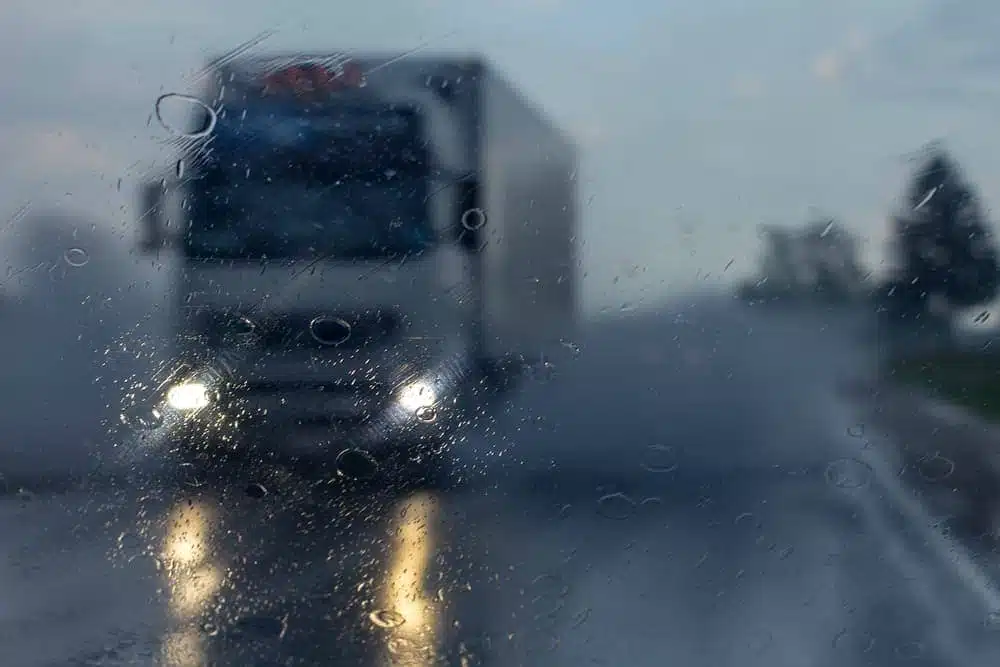
Weather conditions can cause an accident. Drivers may not want to take time off during adverse weather conditions so they can still make the deliveries. Snow and ice make the roads hazardous and slippery. Ideally, the driver should stay in when the roads are slick because they cannot avoid responsibility for a crash by blaming it on the icy roads. They should have made better choices.
Poor Road Conditions
Then, poor conditions on the road itself may have caused the crash. The government must maintain the road and cannot ignore a dangerous condition about which it knew or should have known. In that case, you can also sue the government for the accident.
Construction Zone Accidents
All drivers should slow down when approaching a work zone. Even if a truck driver acts out of an abundance of caution, the conditions in the work zone can cause increased danger. There can be poorly designed signs as drivers approach the area, or the contractor may have left debris in the roadway. The contractor or engineers can be liable for work zone accidents.
Third-Party Errors
The trucking companies may try to outsource various functions to third parties. For example, they may want to avoid investing in maintenance employees, so they will retain a third-party contractor to inspect and maintain the trucks and enlist a third-party cargo loader.
If these companies were negligent, you can also sue them in a lawsuit. As much as the trucking companies may want to point the finger at someone else, they can also be legally responsible for who they determine to hire and allow to work on their trucks.
Defective Truck Parts
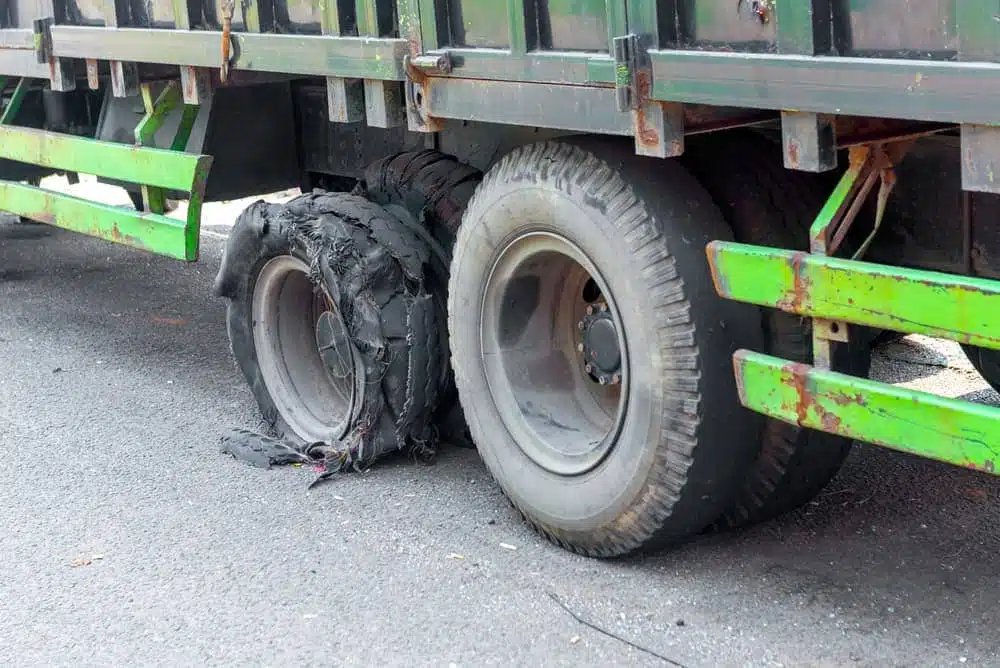
A tire blowout may not be the trucking company’s fault. The tire manufacturer can be responsible for the accident; the same goes for brakes and steering if the truck parts are defective. You can sue anyone who was involved in either manufacturing or selling the truck or truck part when you can prove one of the following:
- There was a defect in the design that rendered it unreasonably dangerous
- There was a manufacturing defect that left the product unreasonably dangerous for its intended use
- The manufacturer failed to warn you of a problem that they knew or should have known about
- The manufacturer was negligent in designing or manufacturing the product
- The manufacturer violated one of several implied warranties
You will need expert witnesses and corporate documents to prove a product liability case. These cases are often part of mass tort lawsuits because the same defective truck parts may have also impacted other drivers.
Your Truck Accident Lawyer Investigates The Cause of Your Crash
To win a Dallas truck accident case, you need more than just proof that you were hurt. You also have to prove exactly how the crash happened and who is legally responsible. That is where an experienced truck accident lawyer makes a major difference.
From the moment you hire a Dallas truck accident lawyer, their team can move quickly to secure and analyze evidence, including:
- The truck’s electronic control module (ECM or “black box”) data showing speed, braking, and throttle in the seconds before impact.
- Dashcam and cab-camera footage from the truck, as well as traffic cameras or nearby business surveillance along Dallas roadways.
- Driver logbooks, ELD data, dispatch messages, and route information to uncover fatigue, speeding, or route violations.
- Maintenance and inspection records from the trucking company and any third-party repair or inspection shops.
- Police crash reports, 911 audio, and first-responder records from Dallas Fire-Rescue or other agencies.
- Photographs, video, and detailed measurements from the crash scene, including skid marks, debris fields, and damage patterns.
In complex cases, your lawyer may also work with accident reconstruction experts, trucking safety specialists, and medical experts to connect the cause of the crash to your injuries and future needs. The goal is to build a clear, evidence-based picture of what happened on that Dallas road and why the trucking company should be held accountable.
Why You Should Never Wait to Consult a Truck Accident Attorney
After a serious truck accident, it is normal to focus on medical treatment and your family first. But waiting too long to speak with a lawyer can quietly weaken your case. Important evidence can disappear in days or weeks as vehicles are repaired or destroyed, electronic data is overwritten, and road conditions change.
In Dallas truck accident cases, time is especially critical because:
- The trucking company controls key evidence such as the truck itself, its black box data, and internal safety and training records.
- Video from traffic cameras, toll plazas, and nearby businesses is often kept only for a short time before being recorded over.
- Witness memories fade quickly, and people who saw the crash may move away or change contact information.
Texas law also limits how long you have to file a lawsuit after an injury. In most personal injury cases, including truck accidents, you generally have two years from the date of the crash to file a lawsuit, but there are exceptions and special rules that can change how the deadline applies in your situation. Missing that deadline can permanently bar you from pursuing compensation.
When you contact a Dallas truck accident lawyer soon after a wreck, they can send preservation letters to the trucking company, begin investigating before critical evidence is lost, and communicate with the insurance adjuster on your behalf so that you are not pressured into an unfair settlement.
Even if you are still in treatment or unsure whether you want to file a claim, a free consultation with a Dallas truck accident attorney can help you understand your options, the likely value of your case, and the steps you can take right now to protect your rights.
- 18-Wheeler Accidents: Why You Need A Truck Accident Lawyer
 18-Wheeler Accidents: Why You Need a Texas Truck Accident Lawyer Traffic accidents often lead to injuries and damages, but the consequences can be devastating when...
 - Texas Suspends CDL Issuance & Renewal for DACA Recipients, Refugees and Asylees
 In September 2025, the Texas Department of Public Safety (DPS) announced a major shift in how the state handles commercial driver’s licenses (CDLs). The department confirmed that it will no longer issue or renew CDLs for individuals protected under the Deferred Action for Childhood Arrivals (DACA) program, as well as refugees and asylees. This move… Read more: Texas Suspends CDL Issuance & Renewal for DACA Recipients, Refugees and Asylees
 - How Truck Accident Attorneys Handle Multi-State Trucking Cases in TexasSummary Why Multi-State Trucking Accidents Are So Complicated When a trucking accident crosses state lines, it’s never as simple as filing a local claim. Multi-state cases involve several layers of law — federal trucking regulations, state traffic rules, and different court jurisdictions. For example, if a truck registered in Oklahoma crashes into a vehicle on… Read more: How Truck Accident Attorneys Handle Multi-State Trucking Cases in Texas
- How Black Box Data Can Make or Break a Truck Accident CaseSummary Why Black Box Data Matters More Than Ever in Truck Accident Cases I’ve worked on enough truck accident cases to say this confidently: black box data often decides the case before it ever reaches a courtroom. In serious truck crashes, stories conflict. Drivers deny fault. Companies point fingers. Witnesses remember things differently. But the… Read more: How Black Box Data Can Make or Break a Truck Accident Case
- How long do you have to file a claim for a truck accident?Summary After a truck accident, victims may have the legal right to seek truck accident compensation if another party’s negligence caused the crash. Filing deadlines, known as the statute of limitations for truck accidents, are strict and missing them can permanently bar your claim. Commercial truck accidents are often complex, involving multiple liable parties, federal… Read more: How long do you have to file a claim for a truck accident?
- What to Do If a Trucking Company Destroys Evidence After a CrashKey Takeaways If a trucking company destroys or hides evidence after a crash, it may be considered spoliation of evidence, which can seriously impact liability in a truck accident claim. Critical evidence such as black box data, driver logs, maintenance records, and dashcam footage often determines fault and compensation in trucking accidents. Victims should act… Read more: What to Do If a Trucking Company Destroys Evidence After a Crash